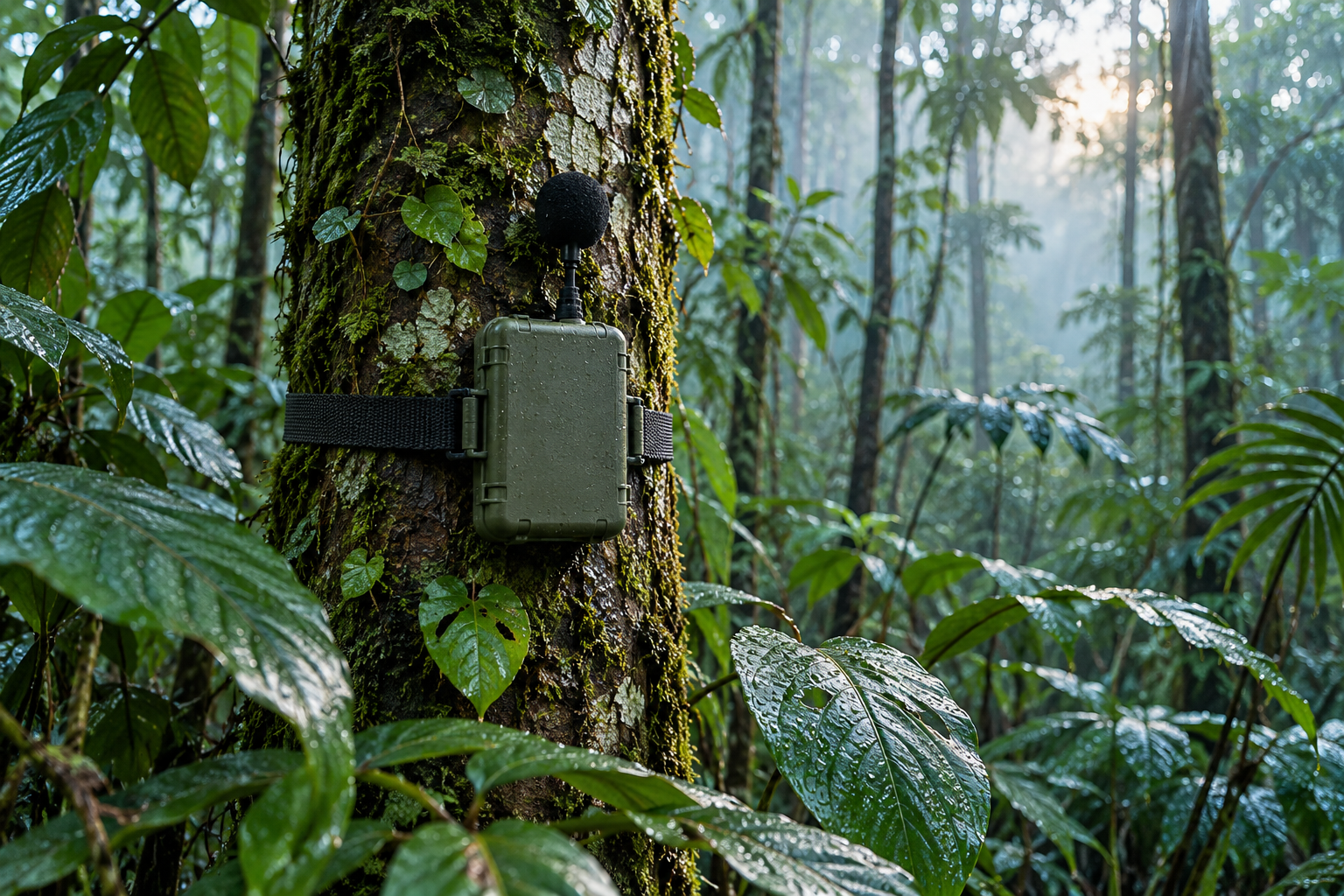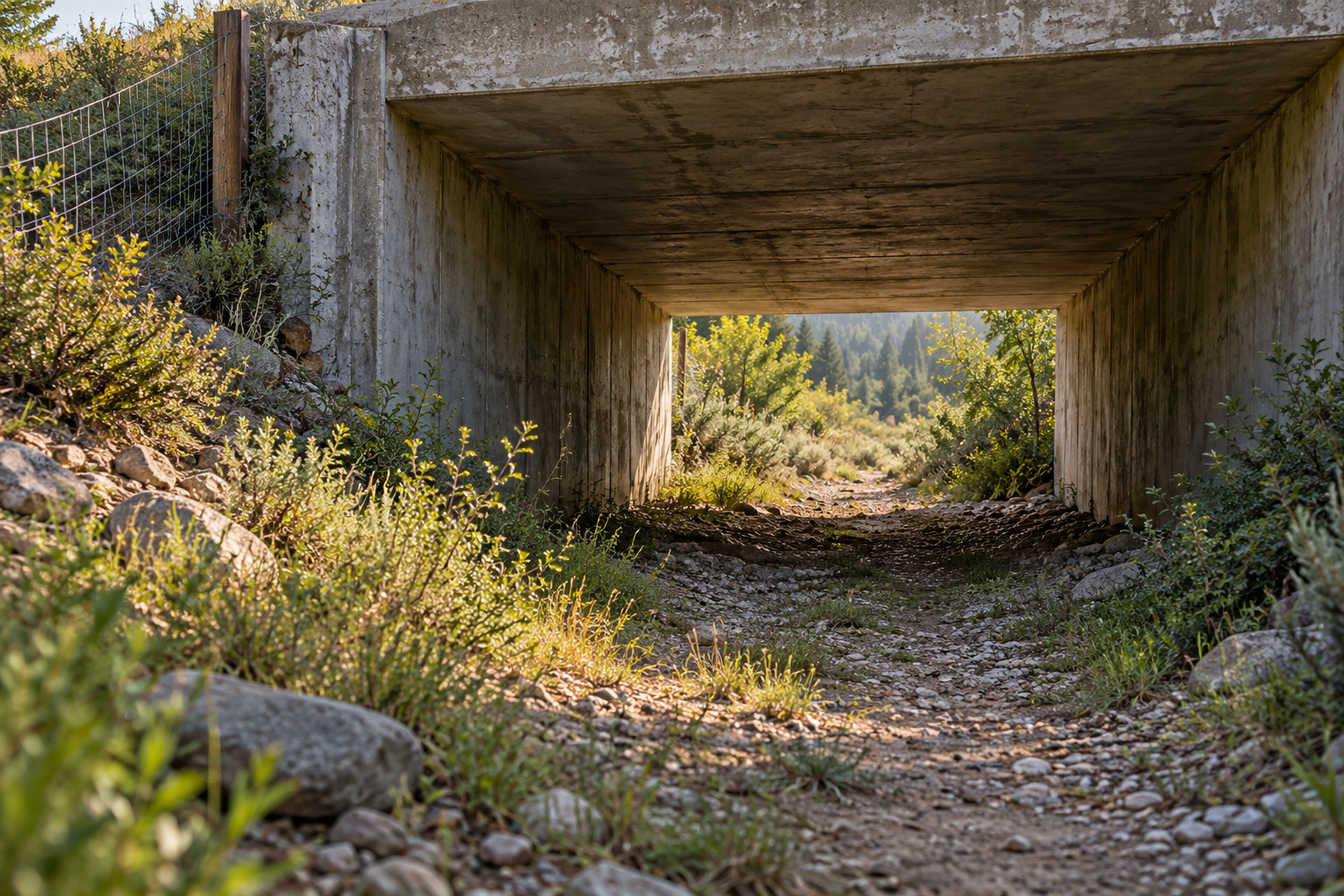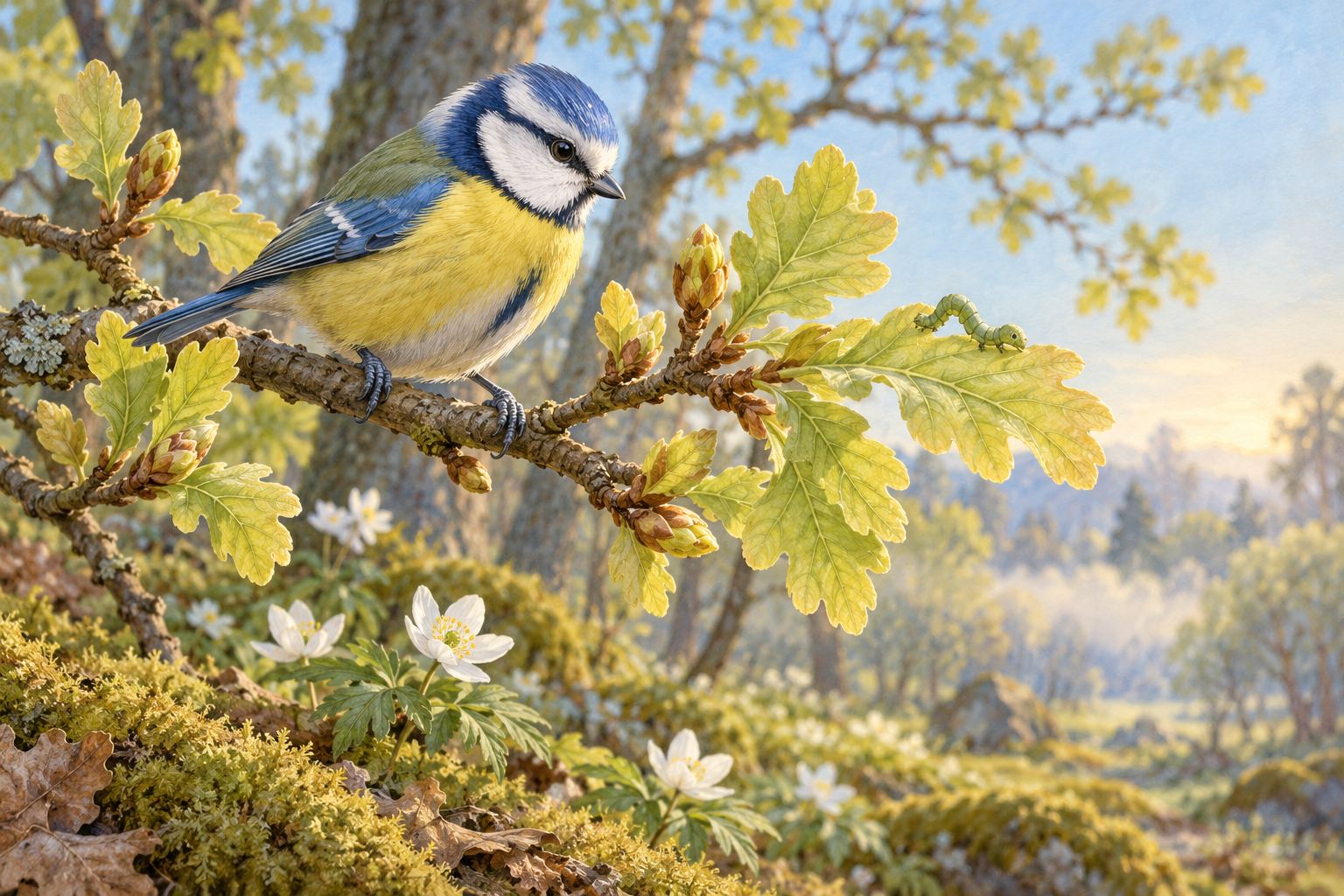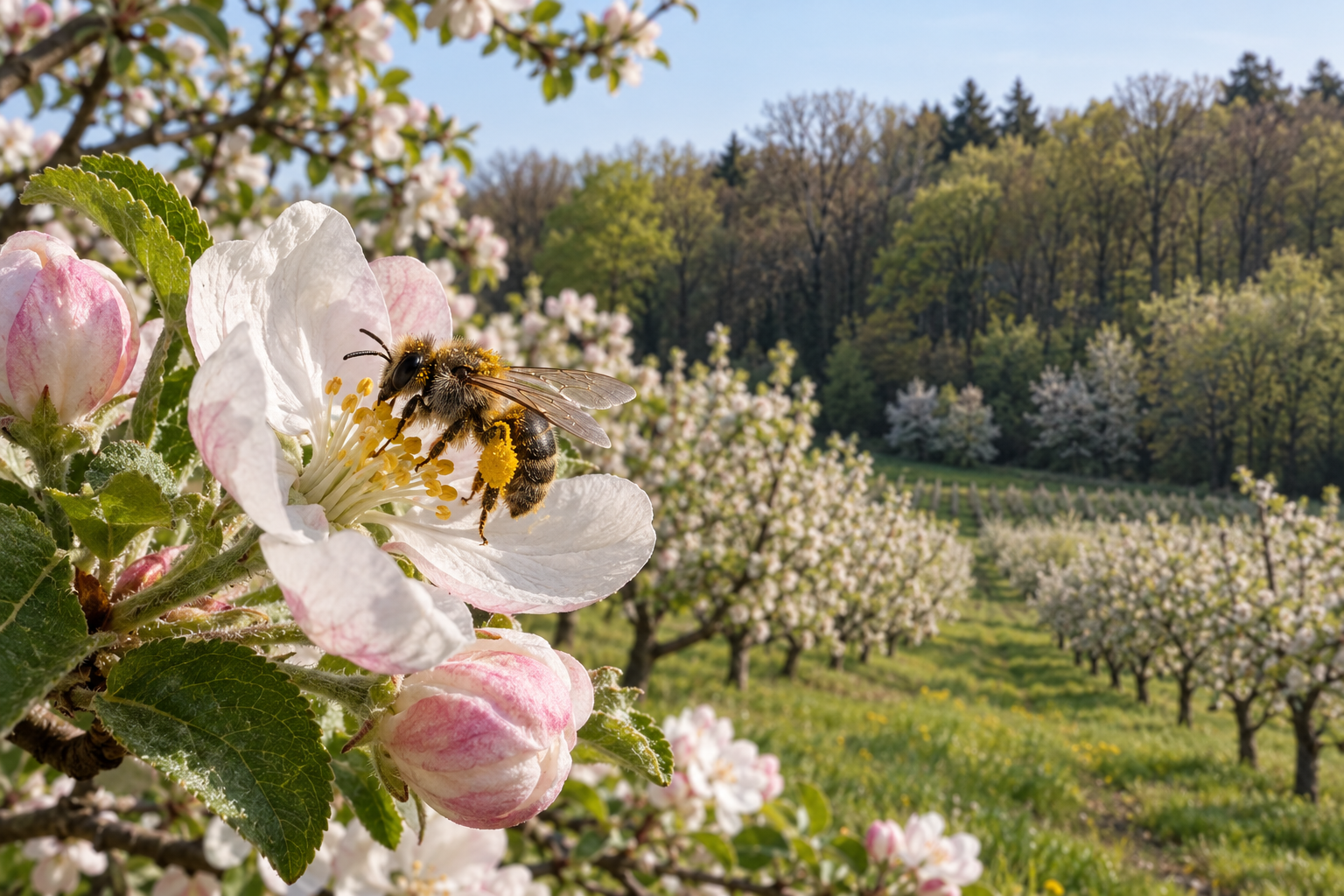
At the edge of an orchard, a bee can leave the shade of a tree and enter a row of blossoms in seconds. The line between forest and crop is plain to the person who planted the orchard. It is less plain to a forager following flowers. Yet seeing the bee cross that line would answer only the first question. Where did it feed before this visit? What pollen is still on its body? Did any of that pollen reach a flower able to use it? Those are different parts of the same journey.
Researchers can look for traces of the journey without following every bee through the trees. In nine New York orchards and the adjoining forest canopies and understories, Katherine Urban-Mead and colleagues collected bees and flower flies through spring. Abundance peaked first in the forest understory, then the canopy, then the orchard. Pollen found in digestive tracts often came from a habitat other than the one where an insect was caught. Canopy-tree pollen remained prominent in diets even when orchard flowers were available. The pattern is evidence that these habitats supply resources at different times, and it is consistent with foragers moving between them.
The detail that makes the result useful also limits it. The researchers examined eaten pollen. A grain in a bee's gut records food from an earlier visit; it cannot be deposited on the next apple blossom. The authors explicitly caution that gut pollen should be read as adult diet, not as the pollen a bee is carrying for a plant. Their study shows a porous habitat boundary and a food connection. It does not measure apple fruit set.
A bee carries pollen in unequal places
Outside the gut, pollen has more than one destination. Female bees groom much of it into structures on their legs for their young. Grains left on other parts of the body may contact a flower's stigma, the receptive surface where pollination begins. In an original study of three native bee species and 46 plant pollen types, Lucia Weinman and colleagues counted roughly five times as many grains in the bees' pollen-carrying structures as elsewhere on their bodies. The division matters. A visibly heavy pollen load can be excellent evidence of collection while telling us less about what will reach the next flower.
The study's authors call body pollen available for transport, with care. They did not watch every grain land on a stigma or develop into a seed. They also found that a bee concentrating its collection on one plant during a foraging bout could carry a smaller proportion of that plant's pollen on the body parts likely to touch a stigma. A bee can be a diligent collector and a less efficient carrier for the plant it visits most. Counting visits or pollen loads alone would miss that distinction.
Some grains stay with a bee longer than a single circuit of flowers. James Cane and Byron Love tested pollen carryover with nesting Osmia californica in a greenhouse. After females foraged among fertile sunflowers and returned to their nests, the researchers moved the nests, bees inside, to cages with male-sterile sunflowers. On the next trip, pollen still on the bees' bodies produced seed on the first flowerhead they visited and on a second. A nest visit had not wiped the carrier clean. The experiment demonstrates a mechanism for pollen to bridge foraging trips. It does not by itself show how far such a grain travels across an open landscape.
The flower supplies the next test
To ask whether the journey matters to a plant, researchers can examine the stigma, then the pollen tube and eventual fruit or seed. Those measurements need not move together. In Costa Rican coffee fields, Taylor Ricketts measured bees and pollen deposition along distances from forest fragments. Within roughly 100 metres of the fragments, bee richness, visit rates and pollen deposition were higher than farther away, out to 1.6 kilometres. Honeybee visits, however, stayed fairly constant across that gradient. A narrow riparian strip did not produce the same visit-rate pattern as the larger fragments. “Near trees” was not one uniform treatment.
Even a grain found on a stigma is an intermediate result. A study of grapefruit orchards beside Argentina's Yungas forest found that both pollen received by stigmas and pollen tubes in styles declined with distance from the forest edge, across sites from 10 to 1,000 metres. Fruit production did not show a significant decline along the same gradient. Hand-pollination tests indicated that both pollen quantity and quality limited production. The crop could receive less pollen farther from forest without the measured fruit count following the same slope. That does not make pollinators irrelevant; it shows why deposition and yield answer separate questions.
The paths between flowers matter too, but it is easy to mistake a proxy for a harvest. In a European field-border study, researchers dusted donor cornflowers with fluorescent dye and inspected recipient flowers 50 metres away. Dye reached more recipients along borders between two crops than across a crop field or along the semi-natural crop borders in that experiment. The dye marked a route, not successful fertilization. In a separate part of the same study, landscapes with denser field borders had more wild bees and greater seed set in potted radish plants. The two results suggest why the arrangement of fields could matter, while leaving the effect on pollinator-dependent crops growing inside those fields unresolved, as the researchers themselves note.
The bee at the orchard edge therefore carries several possible stories at once. The forest may have fed it before the crop bloomed. Its legs may hold pollen for larvae while a smaller residue rides on its body. Some of that residue may reach a compatible flower; a still smaller part may contribute to a seed. Each method catches a different point in that sequence. To understand what crosses a habitat boundary, we have to keep the grain's location—and the plant's response—in view.
A thought worth keeping?